


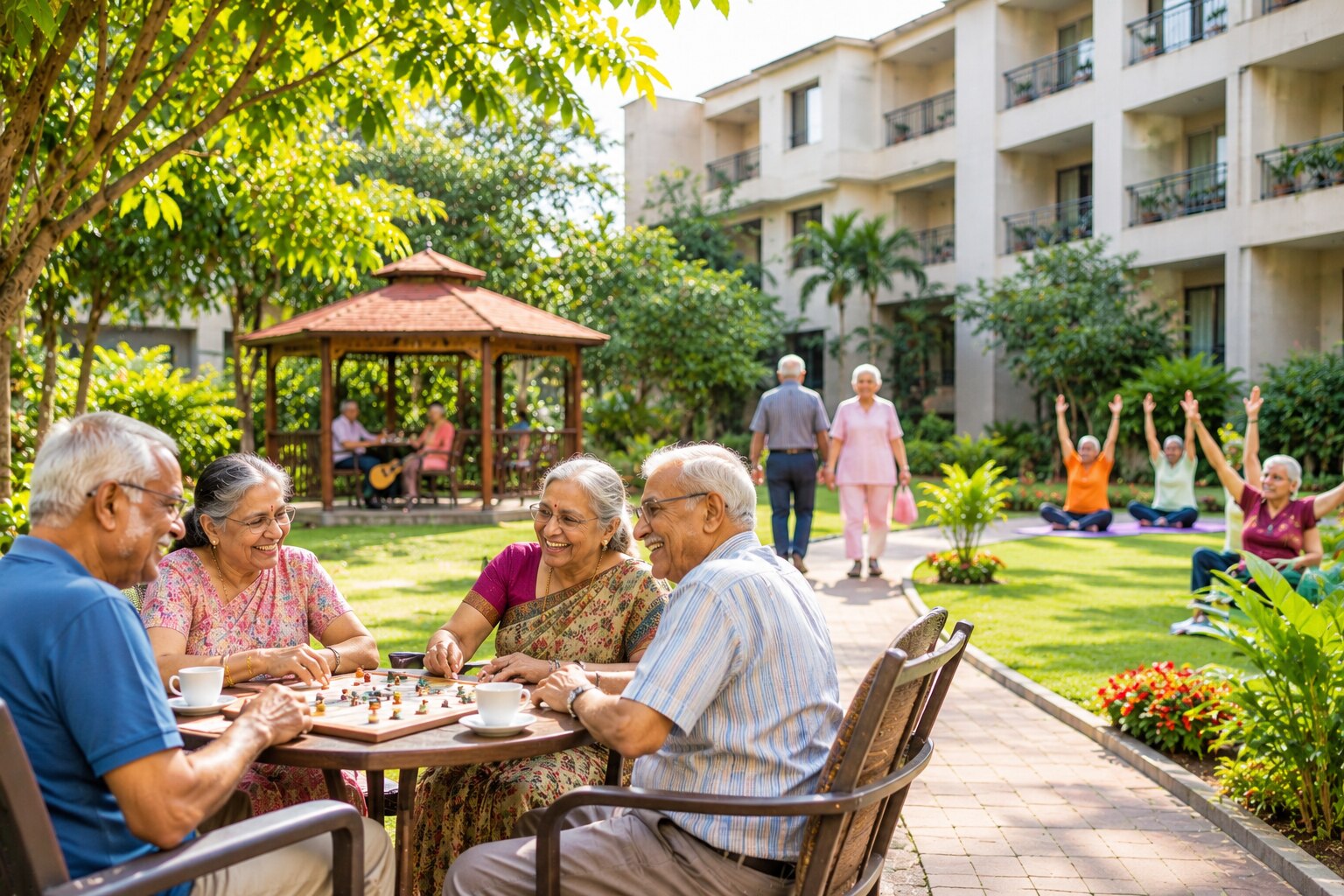
An active retirement community is defined by what residents do each day, how much control they retain, and whether the setting matches their health and social needs. Use the routines, care checks, Pune-specific questions and contract tests below to decide whether community living will expand your life or create restrictions you do not want.
Key takeaways
- Choose a community with flexible routines, social options and support when needed.
- Check walking routes, emergency response, meals, transport and visitor access during your visit.
- Compare monthly fees, deposits, care charges, exit terms and decision-making control.
- Try a short stay before committing to permanent independent living.
What does an active retirement-community day look like?
A useful day has dependable anchors without turning independence into a timetable. A senior citizen daily routine might include breakfast at a chosen time, a morning walk, personal errands, an afternoon rest and an evening gathering. Residents decide whether to join; staff support access rather than control every hour.
Look for recurring retirement community Pune activities that residents help run:
- Walking groups and gentle exercise sessions
- Book, music, craft or gardening clubs
- Shared meals, festival celebrations and birthday gatherings
- Classes, talks, games and skill-sharing sessions
- Volunteering, nearby outings and resident committees
These activities create repeated contact, which builds friendships more reliably than an occasional party. Ask to see the latest monthly calendar, typical attendance and examples of activities proposed by residents; a long brochure list proves nothing if nobody attends.
An active retirement lifestyle also preserves everyday choices. You should be able to select meals where possible, arrange your room, receive visitors, manage your money, choose outings and keep private time. Clarify which decisions belong to you and which require staff approval.
This is independent living, not a nursing home or assisted-living unit: you manage your routine and receive defined support, rather than round-the-clock clinical care. It is also more than a paying-guest arrangement or hiring help at home, because shared activities, resident participation and a structured social life after retirement are built into the setting.
Who suits independent living, and who needs a different arrangement?
Age 60 establishes senior living eligibility in India, but it does not determine the care you need. Independent living suits you when you can manage personal hygiene, eating, toileting, medicines and basic decisions without continuous supervision.
| Area | Independent living fit | Seek a different arrangement |
|---|---|---|
| Health | You manage routine conditions and know when to call for help. | You need medication administration, wound care or 24-hour nursing. |
| Mobility | You walk safely, use your aid correctly and can reach the bathroom during the night. | Falls, transfers, stairs or bathing require regular hands-on help; ask about mobility support for seniors. |
| Memory | You remember appointments, instructions, meals and emergency procedures. | Wandering, missed medicines, unsafe cooking or repeated disorientation creates risk. |
| Privacy | You prefer your own routine and request help when needed. | You want staff checking frequently, supervised activities or constant companionship. |
Independent living versus assisted living is a service distinction, not a lifestyle label. A residence may provide meals, housekeeping, activities and an emergency call system while excluding bathing, transfers, medicine administration and dementia supervision.
Clarify the dementia care boundaries before signing. Ask how staff respond to delirium, wandering, falls and medication errors, and where a resident must move if cognitive needs increase.
Choose assisted living, home nursing or a nursing facility when daily safety depends on another person. Also confirm who holds medical records, contacts family, obtains consent and coordinates hospital care if your decision-making capacity changes.
What should you inspect during a Pune retirement-community visit?
Spend at least one ordinary day at the residence, then return during or immediately after heavy rain. This retirement community visit checklist should test daily senior living safety, not just a furnished model apartment or activity calendar.
- Walk the full route from apartment to dining room, toilet, garden and transport. Look for step-free access, non-slip floors, handrails on both sides, bathroom grab bars, bright lighting, a lift backup and seating near waiting areas.
- Ask who is physically present overnight, the target response time after an emergency call, first-aid training, ambulance arrangements and the receiving hospital. Test the call system if permitted; emergency response for seniors is proven by the action after the button is pressed.
- Ask how staff identify falls, delirium, wandering and medication errors. Request the written escalation process for suspected dementia, visitor and overnight-absence logs, and the boundary between independent living, assisted care and nursing care.
- Read the care contract for medication administration, bathing, transfers, dementia supervision and 24-hour nursing. Confirm what happens if capacity is lost, and record the power of attorney, emergency contact, medical-record access and consent rules.
Check Pune’s monsoon readiness against these failure points:
| Area | Verify on site | Warning sign |
|---|---|---|
| Access | Covered route to transport; dry, grippy paths | Waterlogging or slippery tiles |
| Utilities | Lift, generator and emergency lights during outages | No tested backup |
| Health access | Mosquito control and route to hospital in rain | Staff cannot explain the plan |
How do you compare the real cost, control and care terms?
A retirement community cost comparison starts with the full monthly outflow, not the advertised rent. Add the entry payment, senior living fees and deposits, utilities, meals, housekeeping, transport, activities, maintenance, medical call-outs and hospital accompaniment before comparing two residences.
| Item | Workable term | Warning sign |
|---|---|---|
| Entry money | States whether the payment is refundable, when it is returned and what deductions apply | “Refundable” appears without a date or deduction schedule |
| Monthly charges | Separately prices meals, utilities, care, activities and annual escalation | One bundled fee hides rising or optional charges |
| Exit | Gives the notice period, moving-out process and treatment of unpaid bills after death | The operator can retain the deposit indefinitely |
| Care changes | Defines when independent living ends and prices assisted care separately | Bathing, transfers, medication administration or dementia supervision are promised verbally |
| Personal control | Protects room setup, meals, schedules, outings, finances and resident choice | Staff can impose routines without a written reason |
Read the retirement home contract with the resident, family contact and, if needed, a lawyer. Ask who authorises medical treatment if decision-making capacity is lost, who keeps medication lists and discharge summaries, whether outside doctors or nurses may visit, and who accompanies a hospital admission.
Check resident independence and visitor rules in writing. The policy should cover visitor hours, overnight guests, logged absences, transport bookings, emergency contacts and consent for sharing medical records. A convenient community becomes restrictive when these rules allow routine surveillance or force a higher-care move without notice, assessment or a clear appeal process.
How can families test the fit before a permanent move?
A short trial stay for seniors is the best reality check: it reveals whether a resident joins activities, manages meals and routines comfortably, sleeps well, and forms connections beyond the guided tour.
1. Agree on a one- or two-week stay, with the same room, meal plan and access arrangements proposed for a permanent move. Ask the resident to attend a walking group, class, shared meal or outing, then record what felt enjoyable, tiring or restrictive.
2. Visit at different times, including an ordinary weekday and evening. Check whether residents lead clubs or volunteering, whether attendance is real rather than advertised, and whether the resident can choose visitors, schedules, room setup and outings.
3. Create a written children-abroad senior care plan before arrival. Name the local emergency contact, overseas decision-maker and hospital escort; share medication lists, allergies, doctors, discharge summaries and preferred escalation steps. Confirm video-call access and the frequency of welfare updates.
4. Put authority in writing. Clarify the power of attorney, nominated emergency contact, medical-record access, advance-care preferences and consent process if decision-making capacity changes. Ask exactly when independent living ends and assisted living, nursing care or dementia supervision becomes necessary.
5. Treat retirement community relocation as a staged project: sort medicines and documents, label essential belongings, arrange transport, and keep a backup home-care plan for the first month. At Vrindavan Old Age Home, use the trial to test its actual routines, communication and emergency coordination—not just its facilities.
After 30 days, compare the resident’s sleep, mood, participation, independence and safety concerns with the reasons for moving. That evidence tells you whether it is an active ageing community in Pune, or simply shared accommodation.
Related services
Independent Living Centre in Pune for Senior Citizens Independent Living Centre in Pune for Senior Citizens Vrindavan Oldage Home – Your Second Home Looking for a safe, comfortable, and caring independent living centre in Pune for senior citizens? Vrindavan... View service → |
Senior Citizens Looking for a Change in Lifestyle Senior Citizens Looking for a Change in Lifestyle Elderly individuals who prefer a community environment instead of living alone at home. View service → |
Frequently asked questions
What does an active retirement-community day look like?
A balanced day can include breakfast at your chosen time, a morning walk, personal errands, afternoon rest and an evening gathering. You choose which activities to join while staff support access.
Who suits independent living, and who needs a different arrangement?
Independent living suits seniors who manage daily decisions and personal care with limited support. Someone needing frequent medical supervision, help with most daily activities or memory-care support needs a different care arrangement.
What should you inspect during a Pune retirement-community visit?
Inspect accommodation, walking routes, lifts, bathrooms, emergency call systems, meals, transport, activity spaces, visitor rules and the response plan for falls or medical emergencies.
How do you compare the real cost, control and care terms?
Ask for the full fee schedule, deposit and refund rules, care charges, meal and transport costs, annual increases, notice period, exit terms and the decisions residents control.
How can families test the fit before a permanent move?
Arrange a trial stay or extended visit, follow a normal weekday routine, eat the provided meals, join activities and test transport and emergency procedures before making a permanent decision.
Related service
Independent Living for Seniors Whose Children Live Abroad Vrindavan Oldage Home – Your Second Home Independent Living for Seniors Whose Children Live Abroad Vrindavan Oldage Home – Your Second Home When your children live abroad, you can still enjoy a safe, comfortable, and fulfilling life with the care and companionship you deserve. View service → |