


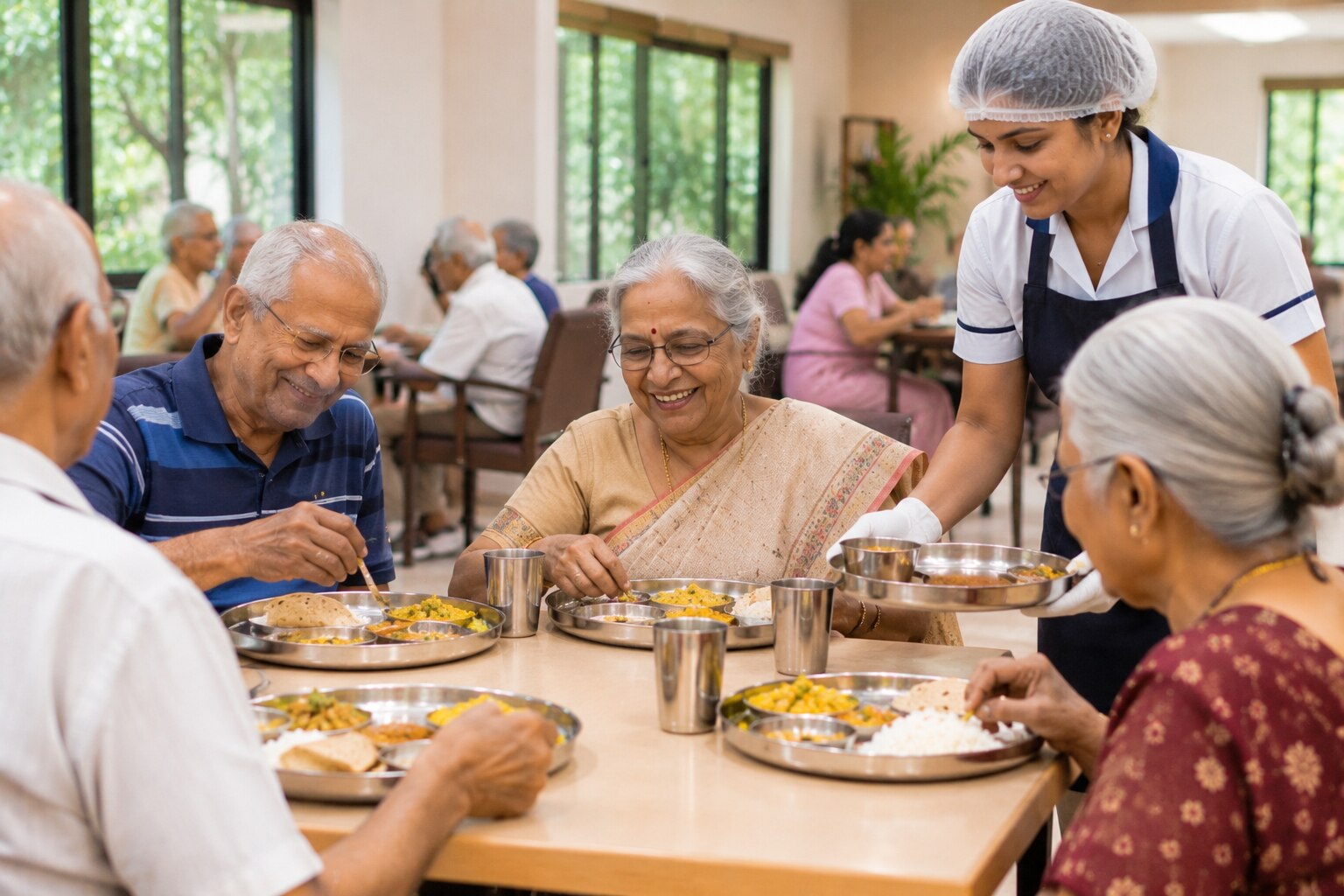
A vegetarian kitchen can offer comforting Pune-style meals, but the word vegetarian does not confirm adequate protein, safe preparation or suitability for diabetes, kidney disease, allergies or swallowing problems. By the end, you will have a menu, kitchen-inspection and admission checklist for comparing an old age home before making a commitment.
Key takeaways
- Check for daily protein from dal, beans, soy, dairy or nuts.
- Request a complete seven-day menu with portion sizes before admission.
- Taste an ordinary meal and inspect kitchen cleanliness, storage and serving practices.
- Record medical diets, missed-meal support and extra food charges in writing.
What to verify in a vegetarian senior-living menu
A vegetarian label does not prove nutritional adequacy. Check whether each day includes protein in vegetarian elderly diet through dal, beans, soy, milk, curd, paneer or nuts—not only rice, chapati, potatoes and tea. Ask for portion sizes and whether staff provide extra food when appetite is poor.
A 100% vegetarian old age home must also define what “vegetarian” excludes. Confirm whether eggs, onion, garlic, Jain preparations and fasting meals are included or kept separate. Familiar Maharashtrian dishes can support nutritious vegetarian meals Pune residents enjoy, but the kitchen must adjust salt, sugar, texture and portion size.
Ask these questions before accepting the menu:
- Can the kitchen provide soft, minced, mashed or thickened meals for chewing or swallowing difficulty?
- Can it prepare lower-salt meals for hypertension or heart failure and lower-sugar meals for diabetes?
- How will staff handle kidney disease, where potassium, fluid and protein targets may differ?
- Will a doctor’s or dietitian’s written plan be recorded and followed at every meal?
- Can you see the kitchen, storage areas, drinking-water arrangements, cleaning schedule and FSSAI registration or licence details?
- Does a sample day show vegetarian food for senior citizens with breakfast, lunch, a snack and dinner rather than repeated starches?
FSSAI registration addresses food-business hygiene; it does not confirm suitability for a particular resident’s medical needs. Visit during an ordinary meal, compare the served food with the menu, check temperature and portions, and ask residents whether meals arrive on time.
For diabetes, kidney disease, swallowing difficulty, recurrent falls or cognitive impairment, obtain clinical dietary guidance before choosing a facility.
A seven-day menu to request before admission
Ask for the actual seven-day vegetarian menu Pune residents receive, not a sample brochure. It should show breakfast, lunch, an evening snack and dinner each day, with familiar Maharashtrian food for seniors alongside other Indian dishes.
Include dal, beans, sprouts, soy, milk, curd, paneer or nuts regularly, rather than relying on rice, chapati, potatoes and tea.
- Monday: poha with curd; varan, rice, chapati and vegetable; fruit; moong-dal khichdi with buttermilk.
- Tuesday: thalipeeth with curd; matki usal, bhakri and leafy vegetable; roasted chana; vegetable pulao with dal.
- Wednesday: idli and sambar; amti, rice, chapati and cabbage; banana; paneer bhurji with soft chapati.
- Thursday: upma and milk; rajma, rice and cucumber; curd; moong khichdi with vegetable soup.
- Friday: sabudana khichdi only when appropriate, otherwise vegetable daliya; dal, chapati and bhaji; fruit; soy or paneer curry with rice.
- Saturday: dosa and sambar; kala chana usal, bhakri and vegetable; milk; dalia with curd.
- Sunday: vegetable paratha with curd; pulao, dal and raita; nuts or fruit; light vegetable stew with chapati.
Confirm meal timings for senior citizens, such as breakfast at 7:30–8:30 a.m., lunch at 12:30–1:30 p.m., snack at 4 p.m. and dinner by 7:30 p.m. Ask whether staff reheat meals, provide smaller portions, and serve soft, minced, mashed, low-salt or diabetic meals under written clinician or dietitian instructions. Test one ordinary meal before admission.
Dietary preferences, medical diets and missed meals
Before admission, record each resident’s food rules in the care file and confirm them with the kitchen. Ask whether meals are fully vegetarian and how the home handles Jain food, onion and garlic restrictions, fasting days, religious meal times, dislikes and diagnosed allergies.
A verbal promise is not enough: test the rule against a sample day’s menu and an actual meal.
For diabetes, kidney disease, hypertension, chewing difficulty or swallowing problems, obtain written instructions from the treating doctor or dietitian. Confirm in writing whether the kitchen can provide a diabetic diet for an old age home resident, low-salt meals for seniors, lower-sugar portions, high-protein dishes, or soft food for elderly residents.
Soft, minced, mashed and thickened textures are different; staff must know which texture is safe and who supervises eating.
- List every allergy, trigger food, fasting practice, texture requirement and acceptable substitute before admission.
- Ask how staff prevent cross-contact, label special plates and document what the resident actually ate.
- Specify who helps with opening containers, cutting food, feeding and checking fluid intake.
If the resident cannot eat the standard meal, staff should offer the documented substitute, record refusal or poor intake, and notify the family or clinician under an agreed threshold. Ask what happens after a missed meal, who checks for dehydration or low blood sugar, and whether a late plate is available.
Confirm these steps before signing.
Inspect the kitchen and taste an ordinary meal
Visit during an ordinary lunch, not a staged tour. Compare the food on residents’ plates with the posted menu, note whether it arrives on time and hot, and ask one resident whether portions and substitutions are dependable.
Your old age home kitchen inspection Pune checklist should include:
1. Ask to see the FSSAI licence for the old age home and confirm that the name and address match the facility. Remember that an FSSAI licence covers food-business hygiene; it does not prove that the menu suits diabetes, kidney disease or swallowing difficulty.
2. Inspect the cooking area, refrigerator, dry-food shelves and waste bins. Look for covered containers, dated leftovers, separate raw and cooked foods, clean chopping boards and a visible cleaning schedule.
3. Check drinking water arrangements. Ask when tanks and filters were last cleaned, whether filter servicing is recorded, and what backup is used during a supply interruption. This is the practical drinking water safety seniors need every day.
4. Ask whether every meal is vegetarian and clarify eggs, onion, garlic, Jain restrictions, fasting meals and allergies. Request the actual rotating menu, not photographs.
5. Taste meal before admission: sample an ordinary breakfast or dinner, then ask for soft, minced, low-salt, low-sugar or thickened versions. Confirm who prepares these changes and how staff identify each resident’s diet.
For Vrindavan Old Age Home, use the same test: request a normal meal visit and written answers, then consider a short trial stay before making a long-term decision.
Related services
Independent Living Centre in Pune for Senior Citizens Independent Living Centre in Pune for Senior Citizens Vrindavan Oldage Home – Your Second Home Looking for a safe, comfortable, and caring independent living centre in Pune for senior citizens? Vrindavan... View service → |
Independent Living for Seniors Whose Children Live Abroad Vrindavan Oldage Home – Your Second Home Independent Living for Seniors Whose Children Live Abroad Vrindavan Oldage Home – Your Second Home When your children live abroad, you can still enjoy a safe, comfortable, and fulfilling life with the care and companionship you deserve. View service → |
Put food, care and extra charges in writing
Ask for one signed agreement covering meals, care limits, reassessment and every extra charge. It should state whether food is 100% vegetarian and whether eggs, onion, garlic, Jain meals, fasting meals and regional dishes are included or excluded.
Do not accept “homemade” as proof that the kitchen can provide a diabetic, low-salt, soft, mashed, high-protein or thickened-texture meal.
A proper pre-admission assessment elderly form should record cognition, hearing, vision, walking, falls, continence, nutrition, mood, chronic diseases and how the resident summons help. The care plan should name who assists with:
- Bathing, dressing, toileting and continence
- Transfers, walking, meals and night-time call-outs
- Two-person transfers, continuous supervision or a move to higher-care accommodation
Independent living versus nursing care must be explicit in the contract. Use this old age home comparison checklist Pune when asking what happens after a fall, hospitalisation, cognitive decline or loss of mobility.
| Independent living | Resident manages most daily activities | Help is limited and care escalation has a defined process |
|---|---|---|
| Nursing care | Staff provide regular clinical or personal assistance | The home accepts assessed care needs and states staffing, supervision and fees |
Request a written schedule for admission or security deposits, refunds, meals, electricity, laundry, housekeeping, medicines, doctor visits, ambulance use, diapers, attendants, repairs, annual increases, notice periods and post-upgrade charges. Confirm meal charges senior living separately from the monthly fee, including missed meals and prescribed diet changes.
For diabetes, kidney disease, swallowing difficulty, recurrent falls or cognitive impairment, attach the treating clinician’s or dietitian’s instructions to the agreement.
Frequently asked questions
What should you verify in a vegetarian senior-living menu?
Check that meals include protein from dal, beans, soy, milk, curd, paneer or nuts, not only rice, chapati, potatoes and tea. Ask for portion sizes and options for poor appetite.
Why request a seven-day menu before admission?
A seven-day menu shows whether meals provide variety, regular protein and familiar foods across the week. Use it to identify repeated dishes, missing snacks and unsuitable foods before admission.
How should dietary preferences and medical diets be handled?
Ask how staff record vegetarian preferences, diabetes-related restrictions, low-salt diets, allergies and texture changes. Confirm who prepares the modified plate and what happens when you miss a meal or eat very little.
What should you inspect in the kitchen and dining service?
Inspect food storage, preparation surfaces, handwashing facilities, serving temperatures and kitchen cleanliness. Taste an ordinary meal rather than relying on a special demonstration menu.
What food-related charges should be put in writing?
Write down included meals, snacks, beverages, extra portions, special diets, missed-meal adjustments and any separate charges. Ask who approves and records changes to your meal plan.
Related service
Senior Citizens Looking for a Change in Lifestyle Senior Citizens Looking for a Change in Lifestyle Elderly individuals who prefer a community environment instead of living alone at home. View service → |